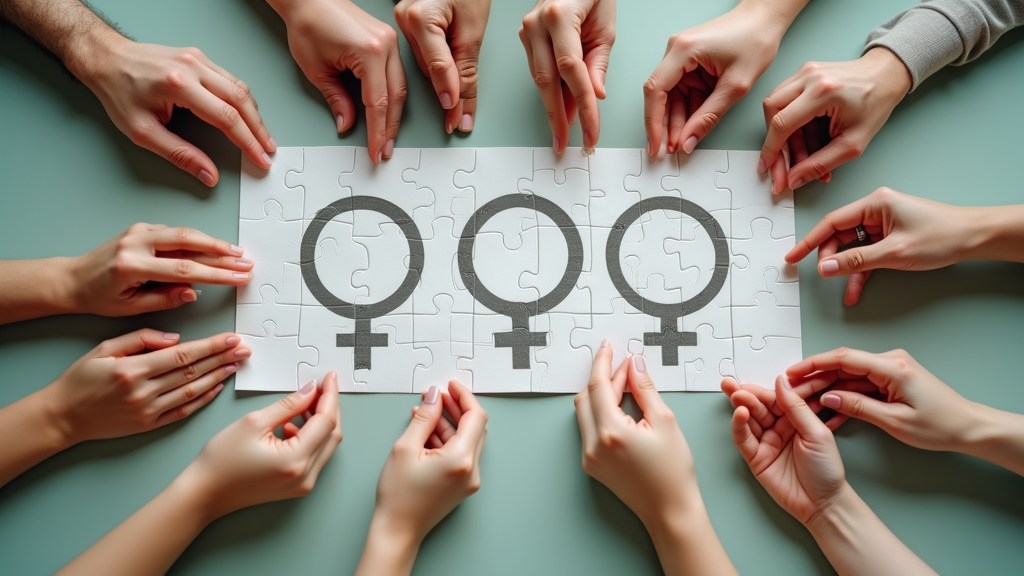
Empowering Women Through Gender-Responsive Systems Change

In today's world, the conversation around gender equality is more critical than ever. Women continue to face systemic barriers that hinder their progress in various sectors, from education to employment. To truly empower women, we must advocate for gender-responsive systems change that addresses these barriers head-on. This blog post explores the importance of such changes, practical strategies for implementation, and real-world examples that illustrate the impact of these efforts.

Understanding Gender-Responsive Systems Change
What is Gender-Responsive Systems Change?
Gender-responsive systems change refers to the process of transforming policies, practices, and structures to promote gender equality. This involves recognising the unique challenges women and girls face and creating solutions that are tailored to their needs. It is not merely about adding women to existing systems but fundamentally rethinking how these systems operate.
Why is it Important?
The importance of gender-responsive systems change cannot be overstated. Here are a few key reasons:
Equity: It ensures that women have equal access to opportunities and resources.
Economic Growth: Empowering women can lead to significant economic benefits.
Social Justice: It promotes fairness and justice, contributing to a more equitable society.
Key Areas for Change
Education
Education is a powerful tool for empowerment. However, many girls around the world still lack access to quality education. To address this, systems must:
Provide scholarships for girls from low-income families.
Implement mentorship programmes that connect girls with women role models in various fields.
Create safe learning environments free from harassment and discrimination.
Healthcare
Access to healthcare is another critical area. Women often face unique health challenges that require tailored solutions. Strategies include:
Improving maternal healthcare services to reduce maternal mortality rates.
Providing comprehensive reproductive health education to empower women to make informed choices.
Ensuring access to mental health services, recognising the impact of gender-based violence and discrimination.
Improving menopause awareness and support for women's health.
Employment
The workplace is where many women encounter systemic barriers. To create a more equitable work environment, organisations can:
Implement flexible work policies that accommodate family responsibilities.
Promote women into leadership roles through targeted training and development programs.
Establish pay transparency to address wage gaps.
Criminal Justice and Social Policy
Too many women are brought closer to the criminal justice system and are often victims of more serious crimes than the ones for which they are convicted. To create a more equitable society organisations can:
Implement whole systems approaches that provide a holistic approach to service design and delivery for women. Reduce the number of times women have to repeat their stories and eliminate stigmatising language within agencies.
Make men accountable for their own desistance (movement away from crime) and ensure that women who are supporting loved ones are signposted to support
Reduce barriers to women accessing their services by meeting women where they are: women do not often talk in the language of need but of things that have happened to them. This means that in a world where there are a variety of support services available
Product and Service Development
Businesses have an opportunity to enhance their offer if they take a more considered and engaged approach with how their products and services are experienced by women and girls.
Design equipment that is suitable for use for women. For example, women farmers report having to adapts seats using large bricks in tractors so they can have an optimal driving position this has unintended health consequences.
Consult with women and girls in your product development and business locations. Does your organisation consider women's safety when deciding where to locate services or launch products?
Consider how gendered are your marketing campaigns: Does your messaging reinforced gendered stereotypes?
Real-World Examples of Success
Nottingham City's Response to Complexity (R2C) Project.
How a multi‑agency, trauma‑informed model transformed support for survivors with "complex needs".
Survivors experiencing domestic and sexual violence who also face multiple disadvantage are routinely failed by traditional service models. Too often, they are labelled “non‑engaging”, “too complex”, or “not ready”, and are pushed between services that were never designed with their realities in mind. Response to Complexity (R2C) set out to change that.
Between December 2015 and February 2021, R2C supported 158 women in Nottingham who were navigating domestic abuse alongside mental ill‑health, substance use, disability, language barriers, homelessness, and poverty. The project brought together refuge provision, specialist complex‑needs domestic abuse workers, substance misuse and mental health teams, interpreters, welfare advisers, and post‑accommodation support to create a genuinely wrap‑around, person‑centred model.
A survivor captured the barriers experienced clearly: “I didn’t feel I was being heard… it just felt too much at that time.”
R2C’s design recognised that the “complexity” does not sit with survivors, but with the systems they must navigate.
What R2C Achieved
Despite the high levels of need, the project delivered strong and sustained engagement:
82% of survivors engaged with support
52% accessed specialist refuge
77% experienced positive interim outcomes
13 women moved into settled accommodation
93% disclosed mental health needs, yet most remained engaged
43% accessed counselling, described by practitioners as “lifesaving”
The model reduced repeated storytelling, widened access to essential services, and improved safety and wellbeing. Survivors who had previously been turned away were able to stabilise, recover, and rebuild.
Why It Worked
R2C demonstrated that effective support for survivors with multiple disadvantage requires:
1. Dedicated specialist workers
Professionals skilled in domestic abuse, trauma, and complex needs acted as consistent anchors for survivors and for partner agencies.
2. Flexible, trauma‑informed refuge provision
No rigid time limits. No assumptions about “readiness”. A focus on safety, dignity, and pacing.
3. Strong multi‑agency partnership
Training, shared language, and a survivor‑centred ethos improved trust and reduced inappropriate referrals.
4. Independent evaluation and reflective practice
Continuous learning strengthened the model and ensured accountability.
Barriers That Persist
R2C also exposed systemic challenges that continue to shape survivors’ experiences:
Austerity and organisational churn
Limited mental health involvement
Attitudes rooted in “deserving vs undeserving victims”
Gaps in disability access, language support, and women‑specific provision
Shortage of suitable accommodation
These barriers are not individual failure: they are structural.
Why R2C Matters
R2C aligns with national Violence Against Women and Girls priorities and Police and Crime Commissioners' commitments to support those most vulnerable to victimisation. More importantly, it shows what is possible when services shift from “Why won’t she engage?” to “How do we remove the barriers?”
This case study demonstrates that survivors with experiencing severe and multiple disadvantage do engage, do recover, and do thrive when systems adapt to them, not the other way around.
If you would like to learn more about the first phase of R2C you can do so here: Harris, Lyndsey and Hodges, Kathryn (2019) Responding to complexity: improving service provision for survivors of domestic abuse with ‘complex needs’. Journal of Gender-Based Violence, 3 (2). pp. 167-184. ISSN 2398-6808 DOI: https://doi.org/10.1332/239868019x15538587319964
Advocacy and Awareness
Raising awareness about gender issues is crucial for driving change. This can be achieved through:
Community workshops that educate both men and women about gender equality.
Social media campaigns that highlight the importance of women's empowerment.
Collaborations with local leaders to promote gender-responsive policies.
Policy Reform
Advocating for policy reform is essential for systemic change. This includes:
Lobbying for laws that protect women's rights and promote equality.
Engaging with policymakers to ensure that women's voices are heard in decision-making processes.
Monitoring and evaluating the impact of policies to ensure they are effective.
Building Partnerships
Collaboration is key to creating sustainable change. Organisations can:
Partner with organisations that focus on women's rights to leverage resources and expertise.
Engage with the private sector to promote gender equality in the workplace.
Work with educational institutions to develop programs that empower girls.
The Role of Men in Gender-Responsive Change
Men play a crucial role in promoting gender equality. Engaging men as allies can help dismantle harmful stereotypes and create a more inclusive society. Strategies include:
Encouraging men to participate in discussions about gender equality.
Promoting positive masculinity that challenges traditional gender roles.
Involving men in advocacy efforts to support women's rights.
Measuring Success
To ensure that gender-responsive systems change is effective, it is essential to measure progress. This can be done through:
Collecting disaggregated data on women's participation in various sectors.
Conducting surveys to assess public attitudes towards gender equality.
Evaluating the impact of programme, services and whole systems approaches aimed at empowering women and improving outcomes for women and girls.
Conclusion
Empowering women through gender-responsive systems change is not just a moral imperative; it is essential for building a more equitable and prosperous society. By addressing the systemic barriers that women face and implementing practical strategies for change, we can create a world where women thrive. The journey towards gender equality requires commitment, collaboration, and a willingness to challenge the status quo. Let us take action today to ensure a brighter future for all.
Call to Action
Join the movement for gender equality by advocating for change in your community. Whether through volunteering, supporting local organisations, or simply educating yourself and others, every action counts. Together, we can create a world where women and girls are empowered to reach their full potential.


Comments