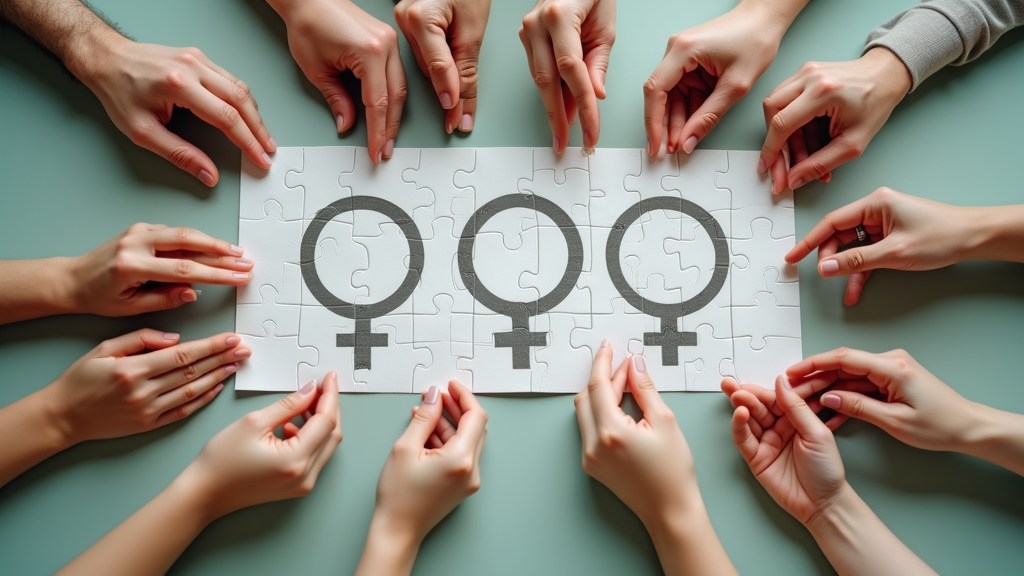
Why we should gently challenge calling women “girls” in professional and community settings

Language shapes status, credibility and belonging: Often more than we realise.
Most people who use the word “girls” to refer to adult women are doing so out of habit, familiarity, or an attempt to sound warm and informal. In many contexts it’s not meant to offend. And yet, in workplaces, clubs, community groups and other public-facing spaces, that same wording can sometimes affect how women are perceived, or how comfortable they feel being addressed.
This isn’t about policing language or criticising individuals. It’s simply an invitation to notice a common pattern and choose words that are accurate and respectful, especially when we’re talking about adults in settings where credibility and equality matter. Over years of working with organisations, it is notable that this language exists in sectors and workplaces shaped by long-standing gendered norms and industries where men have historically been over-represented.
When the conversation is handled gently, small shifts in wording can help a culture feel more inclusive without putting anyone on the spot and recognising sectors are now working to broaden gender diversity.
What to use instead
Women (e.g., “women supporters”, “women members”, “women leaders”)
Women’s + the role or group (e.g., “women’s team”, “women’s network”, “women’s group”)
Supporters, members, or volunteers (when gender isn’t essential to the point you’re making)
Colleagues, staff, or people (in professional contexts)
The group’s chosen name and if you’re unsure, ask what they prefer.

Why “girls” can land badly when we mean women
1) It can feel a little diminishing. “Girl” most commonly refers to a child. When it’s used for adults, some women experience it as slightly minimising or as a signal that they’re not being taken as seriously. If we’re talking about grown women - supporters, colleagues, leaders, volunteers - then “women” is usually the most accurate word.
2) It can diminish professionalism and credibility. In organisational and community settings, language shapes perception. A “women’s supporters group” reads as adult, legitimate and credible. A “girls’ group” can be interpreted as casual, junior, or not quite serious, particularly when the group is engaging with sponsors, partners, the media, or senior decision-makers. Harrison and Tanner (2020) highlight how language matters in scientific settings and the invalidation women might feel when “taking space” in an environment they are stereotypically not expected to work or study.
3) It can echo older assumptions, even unintentionally. Women have long been described in ways that reduce status or suggest less authority. Most people aren’t intending that meaning today, but language can carry history with it and shifting to “women” helps avoid reinforcing those unhelpful undertones.
4) It may not land well for everyone. Plenty of adult women simply don’t identify with being called “girls”. Some find it overly familiar or a bit dismissive. If a group is aiming to be welcoming and empowering, it can help to choose wording that is more likely to work for the widest range of people.
5) Inclusive language is a practical signal of respect. “Women”, “women’s group”, or a neutral name that reflects the group’s purpose communicates adulthood and autonomy. It also signals that equality and representation aren’t just slogans: that they show up in everyday choices.
6) It avoids ambiguity. “Girls” can suggest youth teams, school-age groups, or child-focused activity. If you mean adults, saying “women” prevents confusion and makes the invitation clear.
And if you’re part of an organisation (a club, a charity, a business) the choice of wording isn’t just personal it can have real consequences for trust, reputation and alignment with stated values.
Why organisations should be cautious about endorsing “girls” for adult women
Even when a name comes from supporters or community members (rather than the organisation itself), public association can still be read as endorsement.
1) It can clash with modern equality and inclusion standards. Many organisations invest heavily in women’s participation and gender equality. Referring to adult women as “girls” can jar with that messaging and look out of step with contemporary expectations.
When language feels out of step with stated values, people may wonder whether inclusion is being embedded in everyday practice, as well as in strategy documents.
2) It may be heard as patronising, even if that’s not the intent. If an organisation appears comfortable with language that some women experience as diminishing, it can create avoidable misunderstandings, particularly with stakeholders who care about respectful representation.
This is particularly relevant where the organisation relies on external partnerships, community credibility, or strong EDI commitments.
3) It can alienate women you’re trying to welcome. A group name is often the first “touchpoint”. If the language doesn’t land well, some women may simply opt out quietly and without complaint.
If the goal is to grow participation and belonging, it’s worth reducing avoidable friction wherever possible.
4) Brand alignment matters. When a group name closely references an organisation’s identity (colours, mottos, imagery), the public connection is stronger. That makes language choices more sensitive and more likely to be viewed as reflecting the organisation’s values. If a name is likely to be read differently by different audiences, it can be kinder, and simpler, to address it early rather than having to clarify later.
5) Partnerships and sponsorships increasingly consider inclusion. Many partners look for evidence of respectful representation. Seemingly small language choices can influence how seriously an organisation is taken when it talks about equality.
That’s even more true in contexts where women’s sport and women’s participation are growing commercially and publicly.
6) It helps avoid unnecessary friction. If a term is likely to make some people hesitate or feel overlooked, it’s often easier to adjust early—calmly and respectfully—before it becomes a bigger distraction than it needs to be.
The goal isn’t controversy; it’s clarity and respect.
How to challenge it gently (and keep the relationship warm)
Assume good intent. Most people are aiming for friendliness, not disrespect.
Offer a simple swap. “Shall we say women?” or “Do you mean women supporters/staff?”
Frame it as clarity. “Because it’s an adult group, ‘women’ feels clearer.”
Share your perspective rather than making a judgement. “I’ve noticed some people don’t love ‘girls’ for adults—‘women’ tends to land better.”
If it feels sensitive, nudge privately. A quick message after the meeting can be kinder than a public correction.
Come with options. Suggest a purpose-led name (e.g., “Women Supporters Network”) or ask what wording the group prefers.
A note on nuance: Context matters. Some groups reclaim or self-select “girls” as an in-joke, a brand, or a generational habit and that’s their choice. The key difference is whether adult women are being labelled that way by default in settings where it affects status, professionalism, or belonging. Think about the term, “Girls night out”: what are the origins of that phrase? In popular culture it seems to have gained traction in the 1980s when it began circulating in advertising as a catchy way to describe women socialising together away from domestic or work responsibilities. It was a marketing hook. Most significantly a “girls night out” is often framed as a break from husbands/partners/family commitments. The phrase itself implicitly acknowledges that women’s leisure time must carved out or justified – a temporary rather than structural fix of women’s disproportionate emotional and domestic labour. For intergenerational cultural change to occur it is helpful to consider why some professions continue to normalise the term girls to refer to adult women.
Conclusion
Changing one word won’t fix everything, but words do help shape culture. If we want women to be taken seriously and to feel fully welcome in professional and community spaces, it’s worth choosing language that reflects adulthood, equality and respect. The next time you hear “girls” used to mean women, consider a gentle, good-faith challenge. It’s a small shift, but it can make a real difference to how inclusive a space feels.
Further reading (non-exhaustive)
InsideHook: Kibbe, K. (2021) “Why You Shouldn’t Refer to Adult Women as ‘Girls’”
Medium (Illuminations Mirror): Love, O. (2023) “Men: Why you should call us women, not females or girls”
Everyday Feminism: Rios, C. (2015) “Grown Women Are Not Girls”
The Guardian (Comment): Parkinson, H.J. (2015) “Stop calling women girls…”
Turton-Turner, P. (2013). Villainous Avatars: The Visual Semiotics of Misogyny and Free Speech in Cyberspace.
Salido-Fernández, J. & Muñoz-Muñoz, A.M. (2021). Media Representation of Women Athletes at the Olympic Games: A Systematic Review. Apunts Educación Física y Deportes, 146, 32-41
Huot, Chelsae R., "Language as a social reality: The effects of the infantilization of women" (2013). Dissertations and Theses @ UNI.


Comments